
Sunny Yang-Hicks
[ about / 2026 ]

The short version

I'm a product leader who restarted his career twice and is now reinventing it a third time — voluntarily — to build with AI from the ground up.

Majored in Civil Engineering. My career began in China, in sales. I worked my way up to BD Manager, and from there into running a new B2C initiative in Hangzhou — ten direct reports, a real P&L, and a clean wind-down twelve months in. Then I moved to the US, where my resume didn't translate, and I climbed the product ladder from scratch: Product Analyst → Senior PM → Lead PM → Group PM → Head of Product / Senior Director

Now, in addition to playing the role of people manager, I spend a big chunk of my time hands-on building 0->1 products: defining agent context — system prompts, personas, jobs-to-be-done — and writing code and building evals and shipping deploy scripts. The line between those jobs has collapsed, and the people who noticed that early will define the next ten years of products.

Sunny Yang-Hicks at the Phenom conference
01 / beliefs

What I believe

  • 01

    The career ladder will matter much less than people think — fast.

    The management layer was built to triage information. AI does that for free. The org charts that survive the next five years will be flatter, more cross-functional, and more output-coupled than anything we've seen since the early industrial era. If your job is mostly routing, editing, or summarizing — move up the value-creation chain now.
  • 02

    PM-Design-Eng is one role with three faces, not three roles with shared meetings.

    Anyone can ship a v1 with an agent. The hard part — the part that decides whether your product survives contact with a real user — is decision quality. Second-order effects. Human biases. Unknown unknowns. The shape of the founding product team in 2027 looks more like a small jazz trio than a relay race.
  • 03

    Hyper-personalization is possible. Very few teams know how to engineer it.

    Scaling a personalized experience from 100 users to 100 million is not a UI problem; it's a system-thinking problem. Context layers, memory, eval, drift detection — none of this is in the standard PM curriculum yet. It will be.
  • 04

    Judgement is the next real bottleneck, — and no one has figured out how to build it systematically.

    When anyone can produce anything, the interesting question becomes which thing is worth shipping. The field hasn't developed a muscle for that yet. How teams improve decision quality, measure it, and transfer it between people is the problem I don't have the answer to — but the one I'm most interested in solving.
02 / people

Who's shaping my thinking

A short, opinionated list. I update it when something changes my mind.

Cutting through AI hype

Nate B. Jones

Nate B. Jones

Daily podcast · Substack
The single most useful filter I've found for separating real AI signal from LinkedIn noise. His argument in 'Why 2026 Is the Year to Build a Second Brain' — that when intelligence is abundant, context is the scarce resource, and a second brain is less about note-taking and more about building an active, persistent context layer your agent can actually use — reshaped how I think about what I'm building every time I open Claude Code.


Product as a discipline

Lenny Rachitsky

Lenny Rachitsky

Lenny's Newsletter · podcast
The interview catalog is unmatched. Two-thirds of recent episodes are now about AI's impact on the PM craft, which tracks my own experience: PM is shifting from feature delivery to systems thinking, evals, and operating with blurred boundaries.
Aakash Gupta

Aakash Gupta

Product Growth
The most useful AI-PM tool curation I've found. He's tested everything before I have time to.

Where I disagree (politely)

All-In Podcast — used to be my Sat listen. The political content has crowded out the technical takes I went there for.

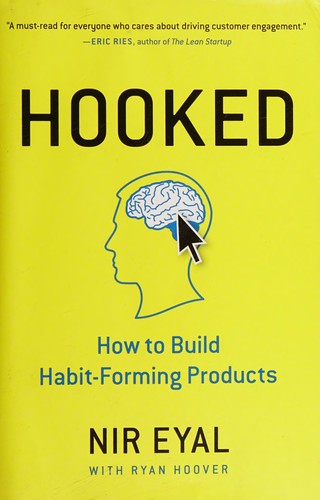
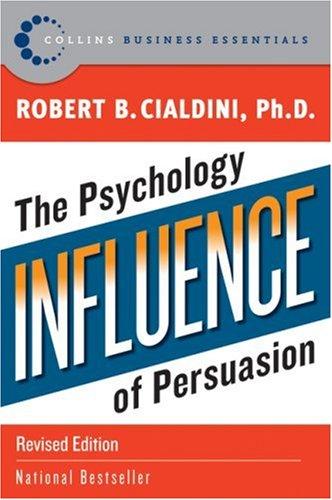
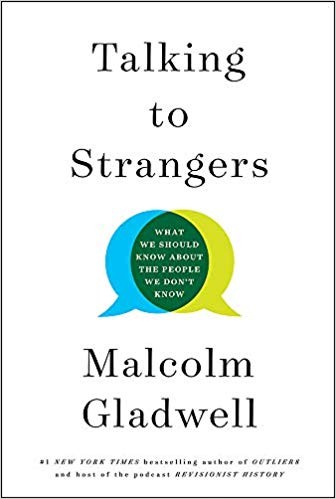
Books that earn their shelf space

03 / takes

Things I'm willing to be wrong about

A rotating list. Some of these will look obvious in two years; some will look stupid.

rough thinking

"Information triage" jobs are the canaries.

Sales coordinators, junior project managers, parts of account management — these roles will compress first, hardest. The work doesn't disappear; the headcount does.

settled view

Your eval discipline is your moat.

If you can measure quality on day one, you can iterate faster than anyone who can't. This is more important than which model you use.

changed my mind

You don't need an MBA to be a great PM. I have one anyway.

It's overrated as a credential and underrated as a forced restart button. Mine was the latter.